
Sports Injury Physiotherapy in Edmonton: Common Injuries and Recovery
Sprains, strains, tendon and knee injuries: how physiotherapy treats sports injuries in Edmonton at each stage, recovery timelines, and when to book.

Sports injuries usually respond well to physiotherapy because most of them are soft-tissue and joint problems that heal fastest with the right loading at the right time. A physiotherapist assesses the injury, controls pain and swelling early, then rebuilds strength, mobility, and control so you can return to your sport with a lower chance of reinjury. In Edmonton, you do not need a referral to start.
This guide covers the most common sports injuries, how physiotherapy treats each stage, how long recovery takes, and when to book.
What counts as a sports injury?
A sports injury is any injury to muscle, tendon, ligament, joint, or bone caused by physical activity. They fall into two broad groups. Acute injuries happen suddenly, such as an ankle sprain, a hamstring strain, or a knee ligament injury. Overuse injuries build up over time from repeated loading, such as tendinopathy, shin splints, or runner’s knee. The most common we see in the clinic include:
- Ankle sprains from rolling or landing awkwardly
- Muscle strains in the hamstring, calf, or groin
- Tendinopathies of the Achilles, patellar, or rotator cuff tendons
- Knee injuries, including ligament sprains and runner’s knee
- Shoulder injuries in throwing, racquet, and overhead sports
- Shin splints and stress-related pain from a sudden jump in training
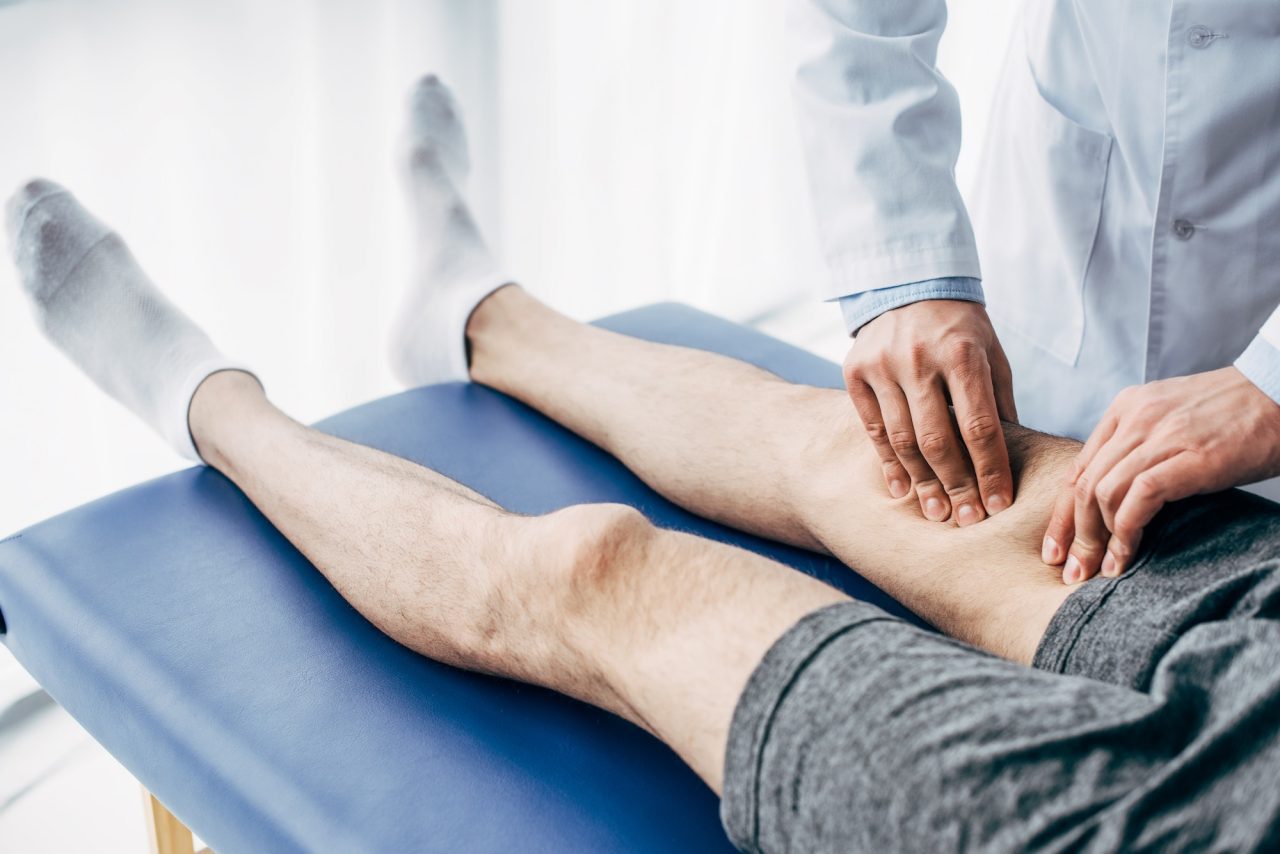
Early hands-on treatment helps settle pain and swelling so you can progress to active rehab sooner.
How does physiotherapy treat a sports injury?
Treatment follows the stage of healing rather than a single fixed protocol. Getting the timing right is what separates a full recovery from a lingering problem.
Early stage: protect and settle
In the first days, the focus is calming pain and swelling and protecting the tissue while keeping you moving safely. Modern sports rehab favours gentle early movement over complete rest, because tissue that is loaded appropriately heals better than tissue that is immobilised.
Mid stage: restore movement and strength
As symptoms settle, your physiotherapist restores full range of motion and starts progressive strengthening. Manual therapy, dry needling, or shockwave therapy may be used to support this, but the strengthening is what rebuilds capacity.
Late stage: return to sport
The final phase trains the specific demands of your sport: sprinting, cutting, jumping, throwing, or heavy lifting. You progress through measurable milestones so you return when the injured area can handle the load, not just when it stops hurting. This stage is where reinjury is prevented.

Progressive loading and sport-specific conditioning are what rebuild capacity and prevent reinjury.
How long does a sports injury take to heal?
It depends on the tissue and the severity. A mild ankle sprain or muscle strain often settles in 2 to 6 weeks, while tendinopathies and ligament injuries can take several months of progressive rehab. Returning too early is one of the most common reasons injuries come back. A structured plan with clear return-to-sport criteria gives you the fastest safe timeline, and your physiotherapist adjusts it to how your body is responding.
When should you see a physiotherapist?
Book an assessment if pain lasts more than a few days, keeps you from training, or keeps coming back. Seek urgent medical care if you cannot bear weight, the joint looks deformed, there is significant swelling right after the injury, or you heard a pop with immediate loss of function, as these may need imaging first. For most sports injuries, early physiotherapy shortens recovery and reduces the chance of a repeat.
Frequently asked questions about sports injuries
Should I use ice or heat for a sports injury?
Sports injuries involving the spine and joints can also be treated chiropractically. See our chiropractic care for sports injuries for strains, sprains, and overuse injuries.
In the first day or two, ice can help manage pain and swelling for an acute injury. Heat is generally more useful later for muscle tightness. The bigger priority is gentle, guided movement rather than complete rest, and your physiotherapist can advise what suits your specific injury.
How soon should I start physiotherapy after a sports injury?
Early is better for most injuries. Starting physiotherapy within the first few days helps control swelling, protect the area, and begin safe movement, which tends to shorten recovery compared with waiting.
Do I need a referral to see a physiotherapist?
No. In Alberta you can book a physiotherapy assessment directly, without a doctor’s referral.
When can I return to my sport?
You return when the injured area can handle the demands of your sport, not just when the pain stops. Your physiotherapist uses strength, movement, and sport-specific tests as return-to-sport criteria, which is the safest way to avoid reinjury.
Book a sports injury assessment in Edmonton
At Beverly Physiotherapy in northeast Edmonton, our registered physiotherapists assess sports injuries, guide you through each stage of recovery, and build a return-to-sport plan around your goals, whether you are a weekend runner or a competitive athlete. No referral is needed to begin.
To book, visit beverlyphysio.ca or call (825) 435-4600.
This article is general information and does not replace an individual assessment by a registered physiotherapist.