
Sprained Ankle on Edmonton Ice: What Helps, When to Get It Checked, and What Physiotherapy Involves
Sprained your ankle on Edmonton ice? What helps in the first days, when to see a doctor, and what ankle sprain physiotherapy in Edmonton involves.

Short answer: most sprained ankles from a slip on the ice can be managed at home for the first few days by protecting the joint, keeping it raised and starting gentle movement as pain allows. If you cannot put weight on the foot, the bone itself is tender, or the ankle is not clearly improving after a week or two, it is worth having it checked. Ankle sprain physiotherapy in Edmonton starts with an assessment of how the joint moves, how stable it feels and how well you balance on it, and then builds a plan to restore strength and balance so you can get back to walking on winter sidewalks with confidence.
This guide covers why sprains are common once Edmonton freezes, what the research suggests for the first few days, warning signs that need a doctor first, what a physiotherapy assessment involves, and why balance training matters. It reflects how we approach ankle injuries at Beverly Physiotherapy on 118 Avenue NW in north east Edmonton.
General information only, not a diagnosis. Our physiotherapists, chiropractor and massage therapists assess every patient first.
Why do ankle sprains happen so often on Edmonton ice?
An ankle sprain is a stretch or tear of the ligaments that hold the ankle bones together. The most common type happens when the foot rolls inward and the sole turns toward the other foot, which strains the ligaments on the outer side of the ankle. Freeze and thaw cycles in Edmonton create exactly the conditions that cause this: a patch of glare ice at the edge of a driveway, a rut of frozen slush on a bus stop curb, or a step that looks clear but has a thin glaze on it.
When your foot lands on a slippery or uneven surface, the muscles around the ankle have a fraction of a second to correct the roll. If they cannot, the ligaments take the load. Thick winter soles can make this harder by reducing the feedback your ankle gets from the ground.
People often call it a rolled or twisted ankle. Severity ranges from a mild stretch that settles within days to a tear that leaves the joint feeling unreliable for weeks. A less common type, the high ankle sprain, affects the ligaments joining the two lower leg bones just above the ankle and tends to take longer to settle.
What should I do in the first few days after a sprained ankle?
For the first two to three days, the goal is to calm things down without letting the ankle stiffen. A widely cited framework in sports medicine is called PEACE and LOVE, published in the British Journal of Sports Medicine. It splits early care into two phases.
Straight after the injury (PEACE):
- Protect: limit movements that sharply increase pain for the first one to three days.
- Elevate: raise the foot above the level of the heart when you can.
- Avoid anti-inflammatories early: the authors question whether they help tissue healing in the first days. Ask your pharmacist or doctor about pain relief that suits you.
- Compress: a compression bandage or sleeve can help limit swelling.
- Educate: most sprains recover with active care rather than passive treatments alone.
In the days that follow (LOVE):
- Load: let pain guide a gradual return to walking and normal activity.
- Optimism: a positive outlook is linked with better recovery.
- Vascularisation: pain-free cardio, such as a stationary bike, supports circulation.
- Exercise: restore movement, strength and balance with a progressive programme.
You may also see the older PRICE approach recommended, including in the NHS guide to sprains and strains, which advises protection, rest, ice, compression and elevation for the first two to three days. Both approaches agree on the essentials: protect the ankle early, control swelling, and start moving again as soon as pain allows rather than resting it for weeks.
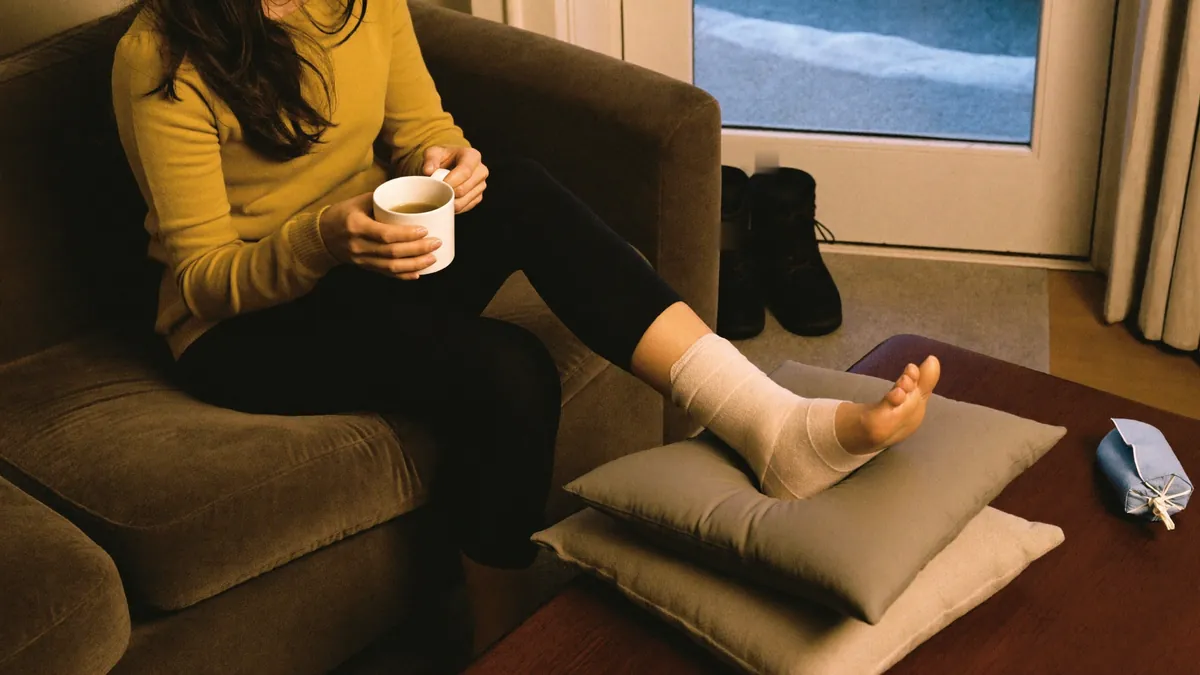
If you need to go outside in the first few days, wear supportive footwear, take shorter steps and use ice grips. A second slip on a sprained ankle is a common setback.
When should a sprained ankle be checked by a doctor first?
Some injuries that look like sprains involve a broken bone or a more serious problem. Doctors in Canada developed a set of guidelines called the Ottawa ankle rules, published in JAMA, to help decide when an X-ray is needed. In general terms, see a doctor, an urgent care centre or an emergency department if:
- You could not take four steps on the injured foot immediately after the injury, and still cannot when you try later.
- There is tenderness when pressing on the bony points at the back edge or tip of either ankle bone, or on the outer edge of the midfoot.
- The ankle or foot looks deformed, or the skin is broken over the injury.
- There is numbness, tingling, a cold or pale foot, or severe pain that is getting worse.
- You heard a loud pop and the ankle feels very unstable, or you have diabetes or circulation problems that affect your feet.
If none of those apply, a sprain can usually be managed at first with the steps above. The NHS guide notes that most sprains and strains feel better after about two weeks, and that more strenuous activities such as running may need longer.
Should I see a physio for a sprained ankle that is not getting better?
Yes. If your ankle is still painful, swollen or unreliable after a week or two, or keeps giving way on uneven ground, a physiotherapy assessment is a sensible next step. Many people also book for guidance on returning to sport, to a job that keeps them on their feet, or to walking outdoors in winter without worrying about the next patch of ice.
In Alberta you do not need a doctor’s referral to see a physiotherapist. Some extended health plans ask for one before they reimburse, so it is worth checking your plan.
Sprained your ankle on the ice? Beverly Physiotherapy is at 4229 118 Avenue NW in north east Edmonton, with no referral needed. Call (825) 435-4600 or book an assessment online.
What does a physiotherapy assessment for a sprained ankle include?
An assessment looks at the whole picture rather than the sore spot alone. It typically includes:
- History: how the injury happened, what you felt at the time, how it has changed since, and any previous sprains on the same side.
- Observation: swelling, bruising and how you walk.
- Range of movement: how far the ankle bends up, points down and turns in and out, compared with the other side.
- Ligament and stability tests: gentle tests that load each ligament to help gauge which structures are involved.
- Strength: the calf, the muscles on the outer side of the lower leg, and the hip muscles that control how your leg lands.
- Balance: standing on one leg, with eyes open and closed, often compared side to side.
- Screening: checking for signs that need a doctor or imaging, as described above.
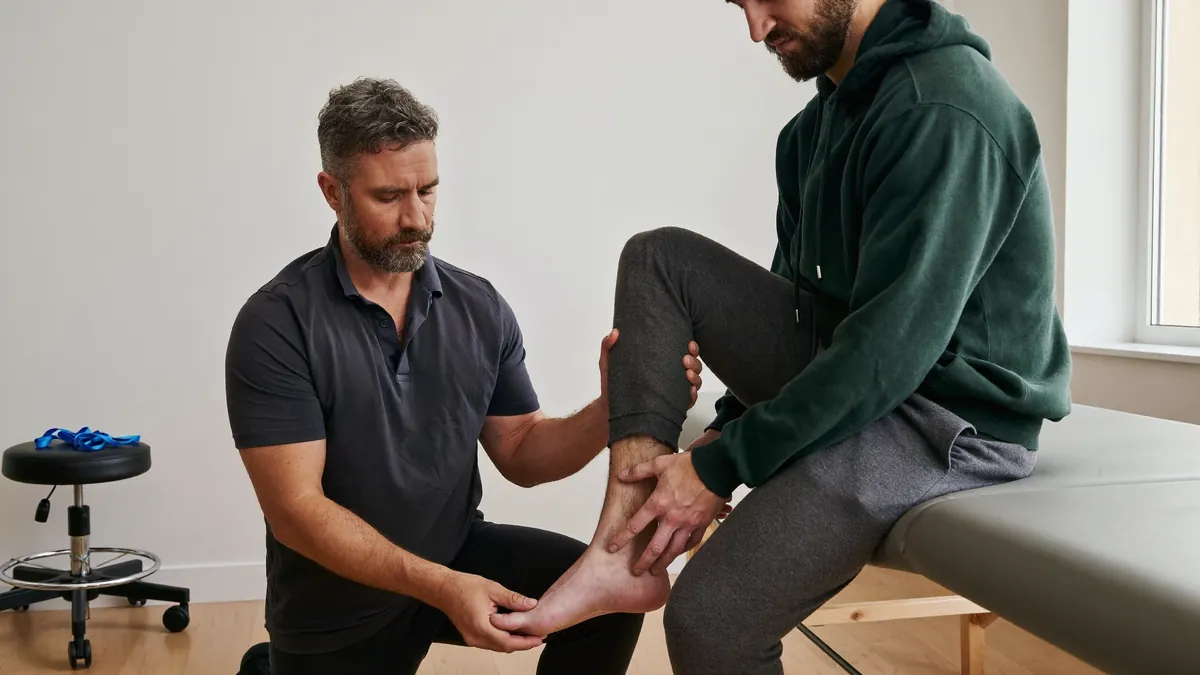
From there, your physiotherapist explains what they found in plain language and sets a plan. Depending on the findings, care may include guided exercise, hands-on manual therapy to restore movement, advice on bracing or taping for higher-risk activities, and a home programme with clear steps to progress it. An evidence-based clinical guideline on ankle sprains in the British Journal of Sports Medicine recommends exercise therapy and functional support, such as a brace, over keeping the ankle immobilized for long periods.
If the sprain happened at work, your care may be covered through WCB Alberta. Our guide to sports injury physiotherapy in Edmonton covers how we approach other common sprains and strains, and our physiotherapy in Edmonton page explains the services we offer.
How do I stop my ankle from rolling again?
A previous ankle sprain is one of the strongest known risk factors for another one. After a sprain, the small sensors in the ligaments that tell your brain where your foot is can work less well, and the muscles that react to a roll can be slower and weaker. That is why an ankle can feel fine for walking on a flat floor but still give way on an icy curb.
The same guideline reports that exercise therapy, including balance and neuromuscular training, can lower the risk of a repeat sprain. A 2021 clinical practice guideline in the Journal of Orthopaedic and Sports Physical Therapy also supports progressive balance and strength exercise as part of rehabilitation. Examples that are often used in programmes include:
- Single-leg standing: near a counter at first, progressing to eyes closed or a softer surface.
- Calf raises: on both feet, then on the injured side, then on a step.
- Resisted ankle movements: with a light elastic band, especially turning the foot outward.
- Reaching and stepping drills: standing on one leg and reaching the other foot in different directions.
- Hopping and landing: later in recovery, for people returning to sport or physical work.
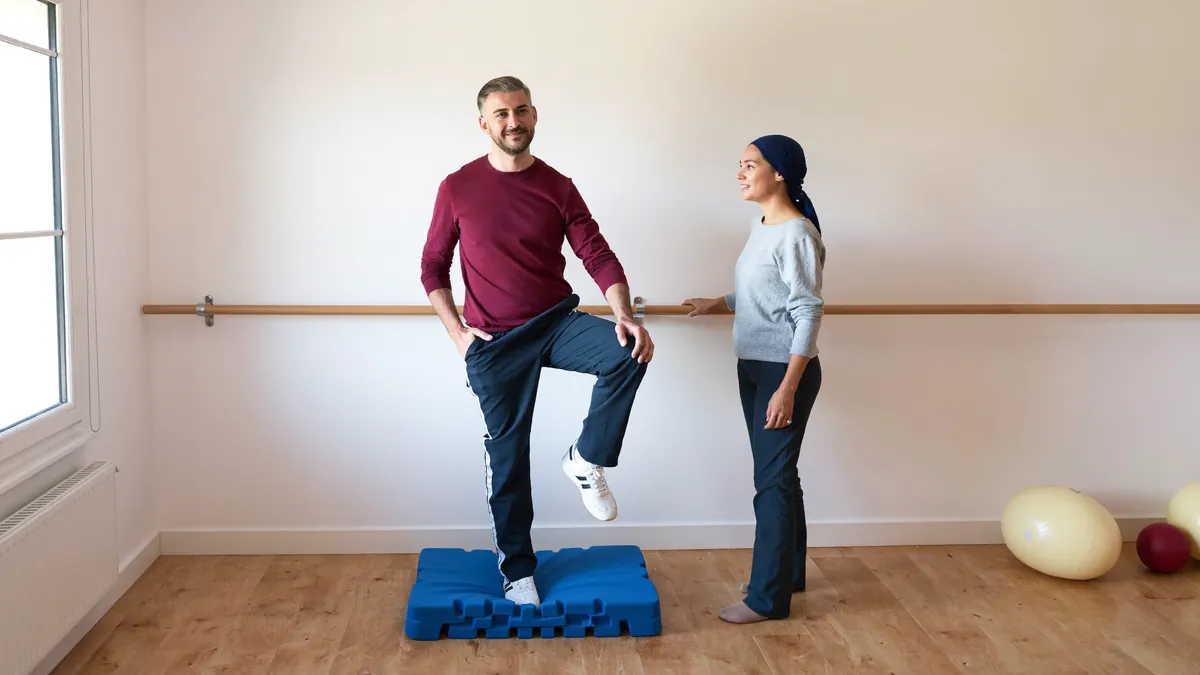
Set up near something sturdy to hold, and stop if pain increases sharply. An assessment helps set the right starting level. Balance work overlaps with falls prevention, so our guide to falls prevention and balance training in Edmonton has more winter walking tips.
Where can I get physiotherapy for a sprained ankle in north east Edmonton?
Beverly Physiotherapy at 4229 118 Avenue NW, in the Beverly neighbourhood of north east Edmonton, assesses and treats ankle sprains. You do not need a doctor’s referral to book in Alberta. We direct bill to most major insurance companies, subject to your plan, and we accept WCB claims for injuries that happen at work. The clinic is open Monday to Friday from 8:30 a.m. to 7 p.m., with parking on site.
Common questions about ankle sprains
How long does a sprained ankle take to heal? It depends on the severity. The NHS notes that most sprains and strains feel better after about two weeks, while strenuous activity such as running may need up to eight weeks. More significant sprains, and high ankle sprains, can take longer. An assessment can give you a clearer picture for your situation.
Should I wear a brace for a sprained ankle? Clinical guidelines generally favour functional support, such as a lace-up brace or taping, over long periods of immobilization. Your physiotherapist can advise whether one suits you.
Do I need an X-ray for a sprained ankle? Not always. The Ottawa ankle rules help doctors decide. If you could not take four steps after the injury, or the bony points of the ankle or midfoot are tender to press, see a doctor or urgent care first.
Do I need a referral to see a physiotherapist for an ankle sprain in Alberta? No. Physiotherapy is directly accessible in Alberta. Some extended health plans require a referral for reimbursement, so check your plan.
Important: This article is general information only. It is not medical advice and it cannot be used to diagnose or treat any condition. Every patient is assessed first by one of our registered physiotherapists, our chiropractor or our registered massage therapists before any treatment, and your care plan is based on that assessment. If you have symptoms, please book an assessment.
Book an ankle sprain assessment in Edmonton
If your ankle is still sore, swollen or unreliable, or you want a plan to get back on winter sidewalks with more confidence, an assessment is a practical first step. Beverly Physiotherapy is at 4229 118 Avenue NW, Edmonton, and no doctor’s referral is needed in Alberta.
Call us at (825) 435-4600, book online, or visit our Edmonton physiotherapy appointment page.