
Sciatica in Edmonton: Leg Pain That Starts in the Back, and How Physiotherapy Assesses It
Sciatica physiotherapy in Edmonton: how leg pain from the back differs from back pain, red flags, what an assessment checks, and physio or chiropractor.

Short answer: sciatica is the name for pain that travels from the lower back or buttock down the back of one leg, often with tingling, numbness or weakness, because the sciatic nerve or one of the nerve roots that form it is irritated. It often settles over weeks to months, and staying gently active usually helps more than resting in bed. Sciatica physiotherapy in Edmonton starts with an assessment that separates leg pain coming from a nerve from ordinary back pain, screens for warning signs that need a doctor, and builds a plan around movement, exercise and, where suitable, hands-on care.
This guide explains what people mean by sciatica, how nerve-related leg pain differs from back pain, the red flags that need urgent care, what a physiotherapy assessment looks for, and the treatment options a clinician may discuss. It also answers a common question: should you see a chiropractor or a physiotherapist first? It reflects how we approach back and leg pain at Beverly Physiotherapy on 118 Avenue NW in north east Edmonton.
General information only, not a diagnosis. Our physiotherapists, chiropractor and massage therapists assess every patient first.
What do people mean by sciatica?
The sciatic nerve is the largest nerve in the body. It forms from several nerve roots that leave the lower spine, passes through the buttock and runs down the back of the thigh before dividing to supply the lower leg and foot. When one of those roots, or the nerve itself, becomes irritated or compressed, pain can be felt anywhere along that path.
Clinicians often use more specific terms, such as lumbar radicular pain, but in everyday language sciatica describes the pattern rather than a single cause. A bulging or herniated disc pressing on a nerve root is one common cause. Narrowing of the spaces that nerves pass through, which is more common with age, is another. The NHS guide to sciatica notes that it usually gets better in a few weeks to a few months, though it can last longer and can come back.
Typical features include:
- Pain in the buttock and down the back of one leg, sometimes into the foot and toes.
- A sharp, burning or electric quality to the pain.
- Pins and needles or numbness in part of the leg or foot.
- Weakness in the leg or foot.
- Pain that is worse with sitting, bending, coughing or sneezing.
How is sciatica different from ordinary back pain?
Most back pain stays in the back, or spreads into the buttock or upper thigh as a dull ache. That kind of referred pain is common and does not usually mean a nerve is involved. With sciatica, the leg pain is often worse than the back pain, travels below the knee, and comes with nerve symptoms such as tingling, numbness or weakness. The NHS puts it simply: you probably do not have sciatica if you only have back pain.

The difference matters because the assessment, the expected course and the exercises can differ. If your pain is mainly in the lower back, our guide to lower back pain in Edmonton covers causes, early self-care and when to see a physiotherapist.
Which red flags need a doctor or emergency care first?
Rarely, nerve compression in the lower back can become an emergency called cauda equina syndrome, which needs urgent hospital assessment. The NHS advises going to an emergency department straight away if you have sciatica and any of the following:
- Sciatica in both legs.
- Weakness or numbness in both legs that is severe or getting worse.
- Numbness around or under the genitals, or around the back passage.
- New difficulty starting to pee, being unable to pee, or loss of control of the bladder or bowels.
In Edmonton, call 911 or go to the nearest emergency department if any of these appear. You should also see a doctor promptly if back or leg pain comes with fever, unexplained weight loss, a history of cancer, a recent significant fall or accident, or pain that is severe and steadily worsening at night. The UK NICE guideline on low back pain and sciatica also stresses ruling out these serious causes before routine care.
Should I see a chiropractor or physiotherapist for sciatica in Edmonton?
Either can be a reasonable first step for leg pain that has no red flags. Both physiotherapists and chiropractors in Alberta are regulated health professionals who can assess you directly without a doctor’s referral, screen for warning signs and refer you on if something needs medical attention. The main difference is emphasis. Physiotherapy care for sciatica usually centres on exercise, graded activity and education, with manual therapy and other approaches as support. Chiropractic care often includes spinal manipulation and mobilization alongside exercise and advice.
The NICE guideline recommends exercise and a combined package of care, with manual therapy such as spinal manipulation or mobilization considered only as part of a treatment package that includes exercise. In practice, what matters most is a careful assessment and a plan you can follow. At Beverly Physiotherapy you do not have to choose blindly: we have registered physiotherapists and a chiropractor in Edmonton under one roof, and the team can talk through which starting point suits your situation.
Leg pain that starts in your back? Book an assessment at Beverly Physiotherapy, 4229 118 Avenue NW, Edmonton. No referral needed. Call (825) 435-4600 or book online.
How does a physiotherapy assessment look at sciatica?
The aim of the first visit is to understand where the pain is coming from, how irritable it is, and whether anything needs referral. An assessment typically includes:
- History: where the pain travels, what makes it better or worse, how it started, how it affects sleep, work and daily life, and a screen for the red flags above.
- Movement: how the lower back and hips move, and which movements change the leg symptoms.
- Neurological screening: checking sensation, muscle strength and reflexes in the legs to see whether a nerve root is affected and how much.
- Nerve sensitivity tests: such as the straight leg raise or the seated slump test, which gently tension the sciatic nerve to see whether that reproduces the familiar leg pain.
- Hip and pelvis checks: because hip joint problems and some buttock muscle problems can mimic sciatica.
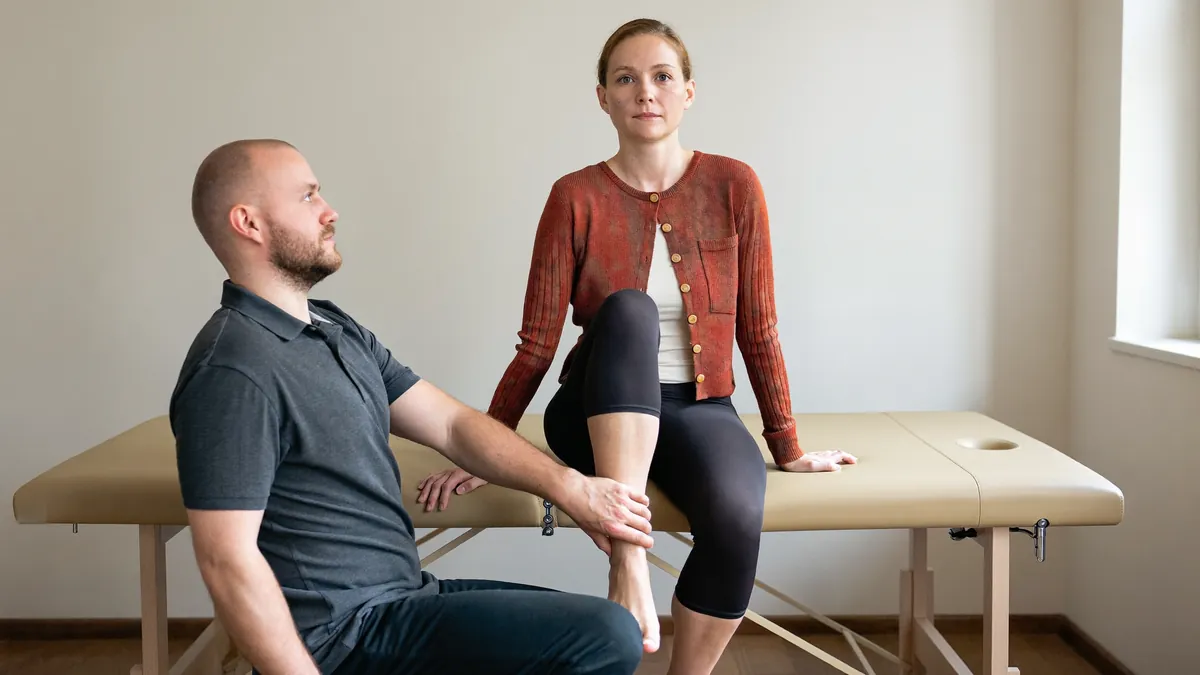
Imaging is not usually needed at the start. The NICE guideline advises against routine imaging for low back pain and sciatica in non-specialist settings unless the result is likely to change management. If your symptoms or test findings suggest otherwise, your physiotherapist will explain why and help you take the next step with your doctor.
What treatment options might a clinician discuss?
Care is based on what the assessment finds, so plans differ from person to person. Options a clinician may discuss include:
- Education and reassurance: understanding what is going on and that movement is generally safe reduces fear and helps people stay active.
- Staying active: the NHS advises carrying on with normal activities as much as possible and avoiding long periods of sitting or lying down.
- Directional and graded exercise: movements chosen because they ease or centralize the leg symptoms, then gradually progressed toward strength and endurance.
- Nerve mobility exercises: gentle, guided movements sometimes called nerve glides, which move the nerve without straining it.
- Manual therapy: hands-on techniques for the spine, hips and soft tissues, used alongside exercise rather than on their own.
- Dry needling or IMS: for some people with muscle tension around the back and buttock. Our guide to dry needling and IMS in Edmonton explains who it may suit.
- Activity and work planning: adjusting sitting, driving, lifting and shifts so you can keep working where possible.
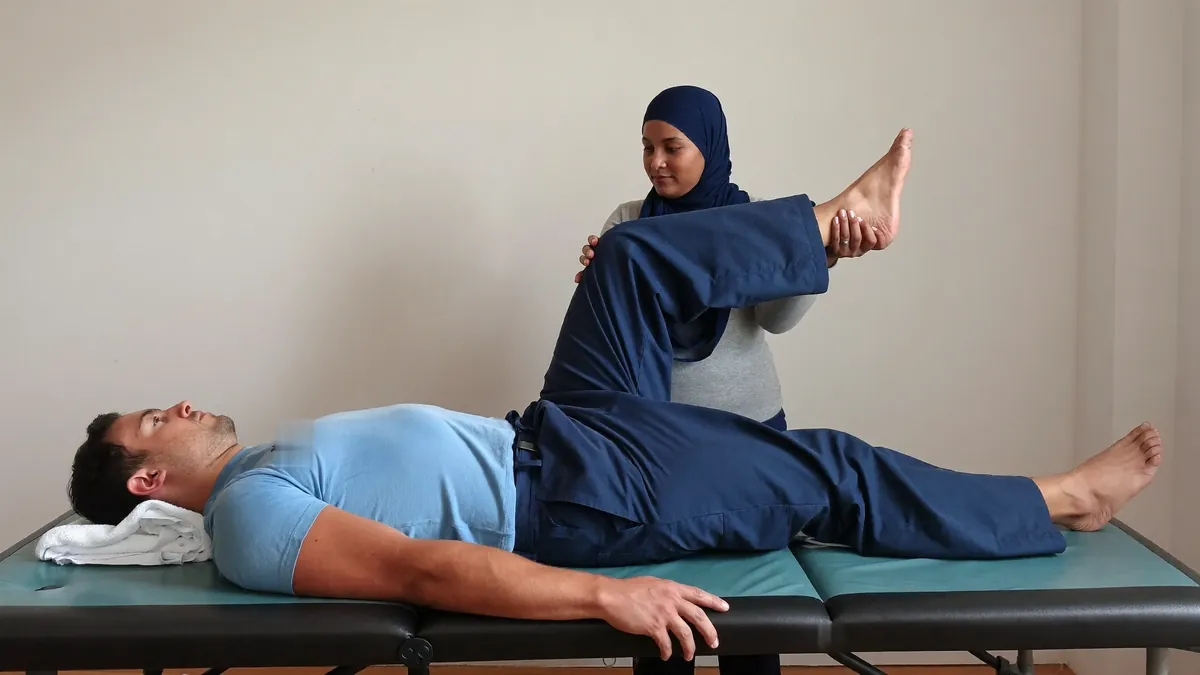
Medication questions belong with your doctor or pharmacist. If symptoms are severe, progressive or not settling with conservative care, your physiotherapist can help you go back to your doctor with a clear summary of findings.
Where do chiropractic and massage fit at Beverly?
Because Beverly Physiotherapy has physiotherapy, chiropractic and massage therapy in the same clinic, care can be coordinated when more than one approach makes sense. Some people start with physiotherapy and add chiropractic care later. Others start with the chiropractor. Massage therapy may help some people with the muscle tension and guarding that often come with back and leg pain, alongside an active plan. Our guide to massage therapy in Edmonton explains what a first visit involves.
Which physiotherapy clinic in north east Edmonton treats sciatica?
Beverly Physiotherapy at 4229 118 Avenue NW, in north east Edmonton, assesses and treats sciatica and other back and leg pain. You can book directly without a doctor’s referral. We direct bill to most major insurance companies, subject to your plan, and accept WCB claims for work injuries and Section B claims after motor vehicle accidents. The clinic is open Monday to Friday from 8:30 a.m. to 7 p.m., with parking on site.
Common questions about sciatica
How long does sciatica last? The NHS says sciatica usually gets better in a few weeks to a few months, although it can last longer and can return. How long it takes varies from person to person, which is why an assessment and a plan you can track are useful.
Should I rest in bed with sciatica? Generally, no. The NHS advises carrying on with normal activities as much as possible and avoiding long periods of sitting or lying down. Movement can hurt, but it is not usually harmful.
Can physiotherapy help sciatica? Clinical guidelines such as NICE recommend exercise and a package of care that can include manual therapy and psychological support for people with sciatica. A physiotherapist assesses you first and then builds a plan suited to your findings.
Do I need an MRI for sciatica? Not usually at first. NICE advises against routine imaging unless the result is likely to change management. Red flag symptoms, or symptoms that are severe or worsening, are reasons to see a doctor.
Is sciatica an emergency? Usually not, but go to an emergency department straight away if you have sciatica in both legs, numbness around the genitals or back passage, or new problems controlling your bladder or bowels.
Do I need a referral to see a physiotherapist or chiropractor in Alberta? No. Both can be seen directly. Some extended health plans require a referral for reimbursement, so check your plan.
Important: This article is general information only. It is not medical advice and it cannot be used to diagnose or treat any condition. Every patient is assessed first by one of our registered physiotherapists, our chiropractor or our registered massage therapists before any treatment, and your care plan is based on that assessment. If you have symptoms, please book an assessment.
Book a sciatica assessment in Edmonton
If pain is travelling from your back into your leg and is not settling, an assessment can clarify what is driving it and set a plan. Beverly Physiotherapy is at 4229 118 Avenue NW, Edmonton, and no doctor’s referral is needed in Alberta.
Call us at (825) 435-4600, book online, or visit our Edmonton physiotherapy appointment page.